I Built Products For People Who Didn't Exist
Two years of mining Reddit for pain points, building the software people said they wanted, and making a few hundred dollars. The problem was never the market research. It was that I didn't want to open any of it.
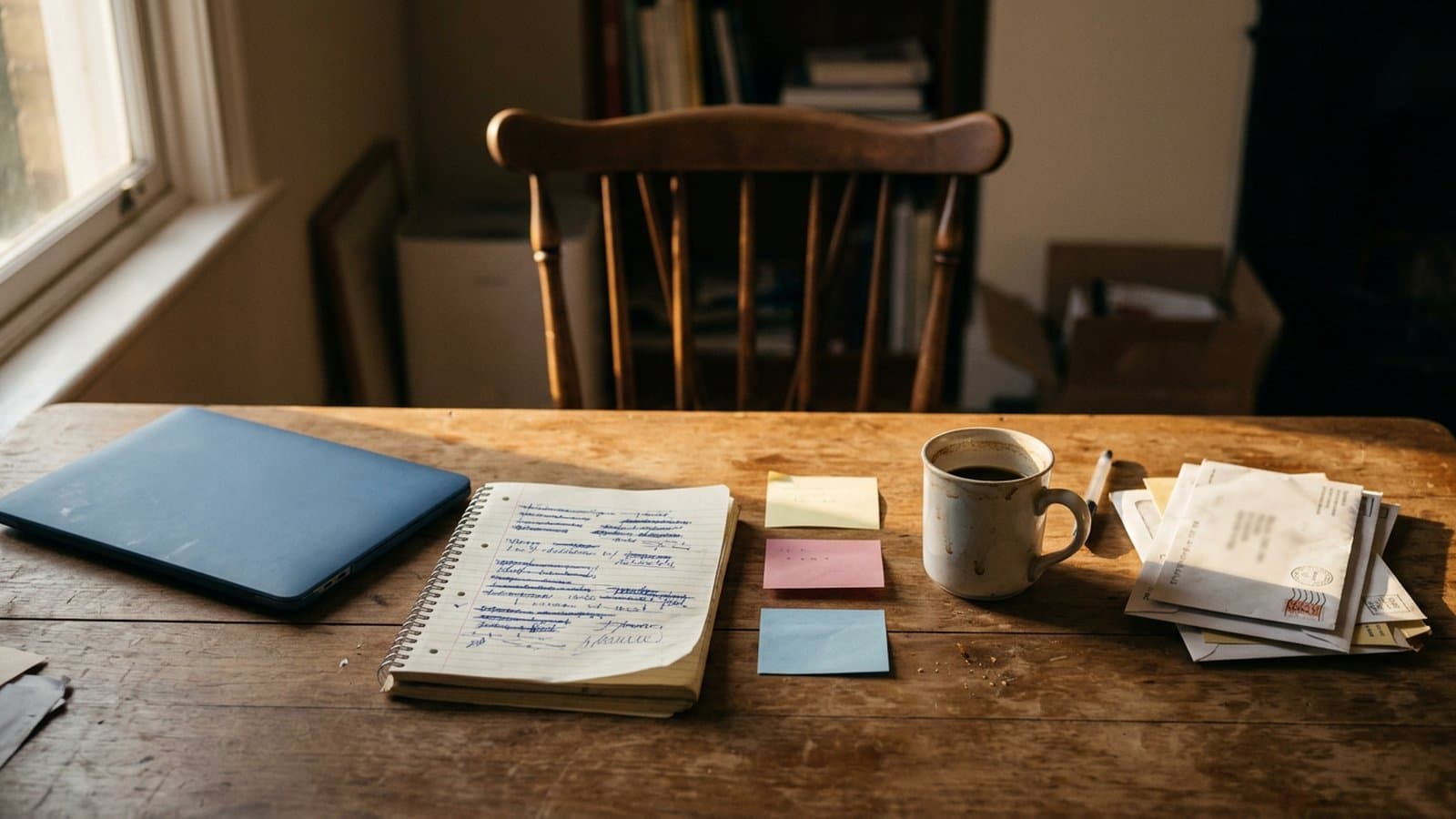
I spent 24 years in the army making sure other people had their Mondays. At my retirement ceremony I told everyone I was going to make a computer company. Simple version. The complicated version is that I spent the next couple of years building software for people I hoped existed.
I did it the way you're supposed to. First I built things I thought people would want, which is the beginner mistake, and I made that mistake for a while. Then I got more sophisticated: I went looking for pain points. Real ones. People on forums saying I wish there was a tool that did X, does anyone know how to solve Y. I built the things they described. Some of them worked. I made a couple hundred dollars.
None of it was successful, and that's not the interesting part. The interesting part is what stopped me.
The problem was not the market research
Here's the thing nobody warns you about when they tell you to build what people want.
You have to open it every day.
I'd get up before my shift and sit down in front of a product I'd built for a stranger's problem, and I had nothing. No pull. It wasn't hard — I know what hard is — it was just dead. And when a thing is dead and it also isn't making money, you're running on discipline alone, and discipline is a battery, not a generator.
I could see the shape of the next two years. More pain-point mining, more products I didn't care about, maybe a few hundred more dollars. I couldn't sustain it. Not because I couldn't do the work. Because I didn't want to.
That's a legitimate reason to stop and I wish somebody had told me that earlier.
So I flipped it
The question I asked myself was: what if I just made the stuff I want to make? At least for right now.
So that's what I did. I built a volumetric thunderstorm that runs in a browser tab with no dependencies. I built a sampling drum machine that an AI agent can play through the same code path a mouse click uses. I built a native MIDI controller shaped like a conservatory with eleven instrument rooms in it. I built sample packs — a mall that closed twenty years ago, a night bus, a frozen lake before sunrise.
Immediately I hit the obvious objection, and I hit it out loud: a lot of these things, people ain't gonna want to spend money on them.
Which is true. It's still true. I have not made money on any of it.
But here's what changed. I get up in the morning and work on this stuff before my shift. I come home and work on it before bed. I work on it all weekend. Not because I'm disciplined about it — I'm not, particularly — but because I want to. That's the difference between something you can sustain and something you can't, and it turns out it matters more than the market research did.
What I actually gave up
I want to be honest about the trade, because "follow your passion" is a garbage way to describe this and I'm not selling that.
I gave up a path that was working slightly, for a path that is working not at all. The pain-point products made a couple hundred dollars. The things I actually want to build have made zero. If you measure only in revenue, I moved backwards.
What I bought with that is time I don't have to talk myself into. Four-thirty in the morning until six, and then again after work, and then the weekend. That's the whole schedule. It compounds slower than people on the internet claim and faster than nothing.
And the work got better. Not because passion makes you talented — it doesn't — but because I stop when something is bad now. When you're building for a stranger's stated requirement, "bad but shipped" is a rational choice. When you're building the thing you want, you can't ship the bad version, because you're the one who has to live in it.
The part I got wrong for months
I built all of it in silence.
Every one of those projects sat in a folder on a drive. I'd finish something, feel good for an afternoon, and start the next one. Nobody saw any of it. I told myself I was building an audience later, after there was enough to show.
That was wrong, and it cost me most of a year. Not because visibility magically creates customers — it doesn't, and I'd distrust anyone who says it does — but because building in silence means you never find out which of your ideas were only interesting to you. That's not a marketing problem. That's a feedback problem, and I'd spent 24 years in an organisation that would never have let me get away with it.
So now I post. Daily, badly at first, and increasingly on camera. The numbers are small and I'm not going to dress them up. But I know more about what I'm making than I did when I was making three times as much of it privately.
If you're in the same spot
Two things I'd tell someone who's mining pain points and quietly hating it:
The sustainability question is a real question. "Can I do this profitably" and "can I do this every day for two years" are different questions, and the second one decides whether you ever find out the answer to the first. Ask it out loud before you commit another six months.
Ship into the open earlier than feels reasonable. Not to build an audience. To find out which parts of your taste are shared and which parts are just yours. Both answers are useful. Neither one arrives from a folder.
What I'm building now
The most recent thing is a sample pack called Abandoned Mall — a hundred and thirty-seven files that sound like wandering a shopping centre years after it closed. Dead escalators, faded pastel signs, a PA system still playing music to nobody. Every sound in it is original and synthesised from scratch.
It isn't released yet. It's finished and it's passed its quality gates, and it will go up when it goes up — I'm not going to link you to a placeholder page. When it's live it'll be linked from here.
Until then, the rest of the working notes are on the blog.